Accessible Kitchen Renovation Features for Adaptive Homes in Vancouver
An Adaptive kitchen renovation in Vancouver is an opportunity to create a safer, more functional, and more comfortable space that supports changing needs over time. Whether you are planning for aging in place, accommodating a family member with mobility challenges, or designing a multi-generational home, an adaptive kitchen renovation can make everyday tasks easier, safer, and more enjoyable.
Since 1985, Abstract Homes and Renovations has helped homeowners across Metro Vancouver create thoughtful home renovations that support changing lifestyles. Our team works with homeowners in Vancouver, West Vancouver, Kitsilano, Kerrisdale, North Vancouver, West Broadway, North Burnaby, Coquitlam, Port Moody to design adaptive homes that are safe, practical, and built for the future.
Considering a new project for your home?
Whether it’s a renovation or a brand-new build, get expert advice from a team that has crafted award-winning homes across Vancouver.
How Abstract Homes and Renovations Design & Help with Accessible Kitchen Renovation in Vancouver?
Every home and household is different. At Abstract Homes & Renovations, our adaptive kitchen renovation process begins with understanding how you use your space, who uses the kitchen, and what challenges or future needs should be considered.
For many Vancouver homeowners, especially those in older homes in neighborhoods such as Kitsilano, Kerrisdale, North Vancouver, and West Broadway, existing kitchens may have narrow walkways, limited storage access, poor lighting, or layouts that are difficult to navigate. These issues can become more challenging over time, especially for seniors or family members with mobility concerns.
Our team helps homeowners plan kitchen renovations that support:
- Aging in place
- Senior living needs
- Multi-generational households
- Mobility aids such as walkers or wheelchairs
- Safer daily cooking and food preparation
- Long-term comfort and independence
By combining accessible design principles with quality craftsmanship, we create kitchens that feel natural, beautiful, and easy to use.
What Are Some of the Important Kitchen Upgrades to Improve the Accessibility?
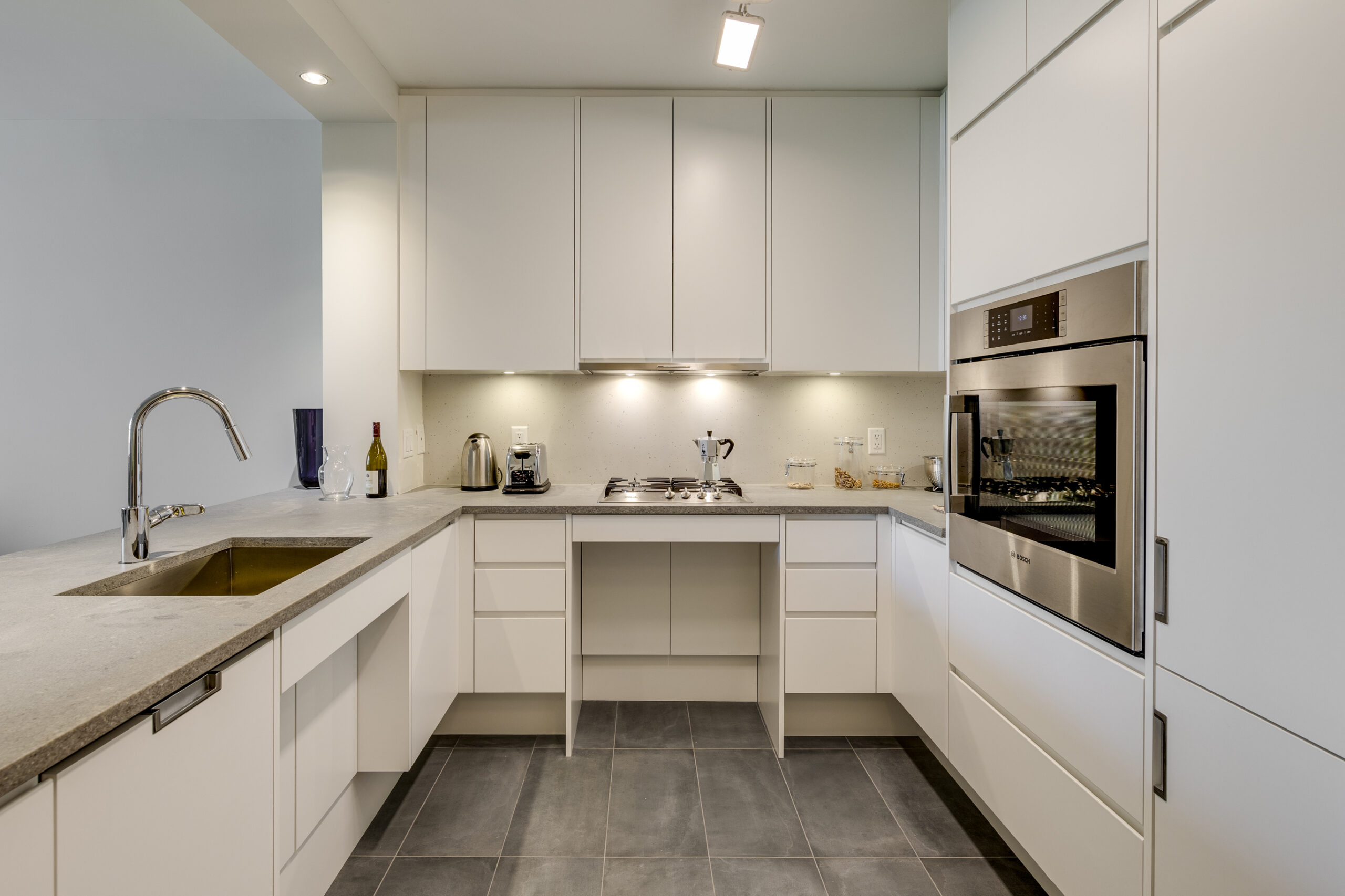
The goal is not to make the kitchen look medical or overly specialized, but a well-designed accessible kitchen that can be modern, warm, stylish, and highly functional while including features that improve safety, movement, reach, and everyday convenience.
Counter Height Solutions for Kitchens in Adaptive Homes in Vancouver
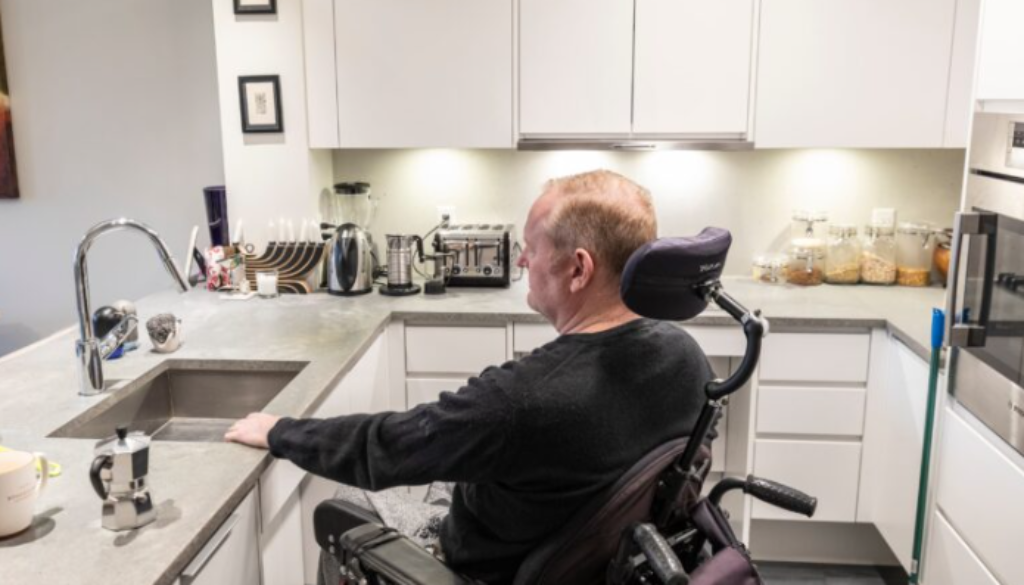
Standard kitchen counters may not work equally well for every member of the household. For individuals who use wheelchairs, mobility aids, or prefer seated meal preparation, lower or varied counter heights can make the kitchen much easier to use.
It may include:
- Lower work surfaces for seated food preparation
- Varied counter heights for different users
- Open knee space beneath selected counters
- Easy-access prep areas near sinks, cooktops, or appliances
- Thoughtful placement of frequently used items
When planned carefully, these counter height solutions can blend seamlessly into the overall kitchen design. They improve accessibility while maintaining the polished appearance homeowners expect from a high-quality kitchen renovation.
For senior living and aging-in-place needs, counter height planning is especially important because it can reduce strain, improve comfort, and support greater independence during daily tasks.
Better Kitchen Accessibility with Improved Floor Space
One of the most important elements of an adaptive kitchen is adequate floor space. Kitchens that feel crowded or difficult to navigate can become increasingly challenging for homeowners with mobility concerns.
A well-designed kitchen renovation should allow comfortable movement throughout the space, including enough room for:
- Wheelchairs and walkers
- Family members cooking together
- Carrying groceries and household items
- Safe movement around islands and workstations
Open circulation paths help create a kitchen that feels more spacious and functional while improving accessibility for current and future needs. At Abstract Homes and Renovations, accessibility and usability are carefully considered during the planning stage to help homeowners create kitchens that support long-term comfort and independence.
Accessible Cabinet Storage and Easy Grip-Hardware
Storage solutions play a significant role in making a kitchen easier to use. Traditional cabinets often require bending, reaching, and excessive effort to access everyday items. During an adaptive kitchen renovation, homeowners may benefit from features such as:
Pull-Out Shelving: Pull-out shelves bring stored items forward, making them easier to access without excessive bending or reaching.
Deep Drawers Instead of Lower Cabinets: Drawer systems improve visibility and accessibility while reducing strain on the back and knees.
Easy-to-Grip Cabinet Hardware: D-shaped pulls and larger handles are easier to operate than small knobs, particularly for individuals with reduced grip strength or arthritis.
Frequently Used Items Within Reach: Placing commonly used kitchen items in accessible locations helps improve convenience and reduce physical strain during daily tasks.
These small design choices can significantly improve kitchen usability while maintaining a modern and attractive appearance.
Proper Kitchen Lighting Matters for Adaptive Homes
Focused lighting above preparation areas, sinks, and cooktops helps improve visibility during food preparation and cooking. General lighting creates a comfortable environment while reducing harsh shadows throughout the space. Proper fixture placement and lighting selection help minimize glare, making the kitchen easier to navigate and use.
Safe and Durable Flooring
Kitchen flooring should support both safety and long-term durability. Slippery surfaces, uneven transitions, and excessive glare can create unnecessary risks for homeowners of all ages.
Popular flooring options for adaptive homes in Vancouver include:
- Matte-finish porcelain tile
- Luxury vinyl plank flooring
- Properly finished hardwood flooring
- Slip-resistant flooring materials
These options offer a balance of safety, durability, and aesthetic appeal.
Contact Us Now for Adaptive Kitchen Renovation in Vancouver
With over 40 years of experience serving homeowners throughout Metro Vancouver, Abstract Homes and Renovations brings the expertise needed to create kitchens that support aging in place, multi-generational living, and long-term accessibility goals.
Ready to create a kitchen that works for your lifestyle today and tomorrow? Contact Abstract Homes and Renovations to schedule a Healthy, Ageless and Adaptive Living Home Audit and discover how an adaptive kitchen renovation in Vancouver can help you enjoy your home for years to come. We can help homeowners in West Vancouver, Kitsilano, Kerrisdale, North Vancouver, West Broadway, North Burnaby and surroundings.
FAQs About Adaptive Kitchen Renovations in Vancouver
What is an adaptive kitchen renovation in Vancouver?
An adaptive kitchen renovation in Vancouver is a kitchen remodel designed to improve safety, accessibility, and long-term usability for homeowners planning for aging in place, senior living, mobility support, or multi-generational living.
What kitchen features are best for aging in place?
Helpful aging-in-place kitchen features include wider walkways, varied counter heights, pull-out shelves, easy-grip hardware, slip-resistant flooring, improved lighting, and accessible appliance placement.
Can an accessible kitchen still look modern?
Yes. A well-designed accessible kitchen can look modern, warm, and high-end while including features that improve safety, comfort, mobility, and independence.
Do you provide adaptive kitchen renovations outside Vancouver?
Yes. Abstract Homes & Renovations works with homeowners in Vancouver, West Vancouver, Kitsilano, Kerrisdale, North Vancouver, West Broadway, North Burnaby, Coquitlam, Port Moody, and surrounding Metro Vancouver communities.
Why should I renovate my kitchen for senior living?
A kitchen renovation for senior living can reduce daily strain, improve safety, make storage easier to access, and help homeowners remain comfortable and independent in their homes for longer.